MRO Procurement: A Practical Guide for Industrial Buyers
A production line stops because a critical sensor fails. The maintenance team identifies the required part, but the usual supplier cannot confirm availability, the original manufacturer quotes a long lead time, and production cannot wait several weeks for a replacement. The challenge is no longer simply repairing equipment. It is finding the correct component quickly without introducing unnecessary cost or supply risk.
MRO procurement covers the purchasing activities required to maintain equipment, repair failures, and support day-to-day industrial operations. It includes sourcing spare parts, maintenance supplies, repair materials, and other items that help facilities operate reliably. For manufacturers, an effective process connects maintenance requirements with supplier availability, technical verification, purchasing decisions, and delivery planning.
MRO purchasing can become particularly complex when equipment uses specialized automation components, older parts, or products sourced through international supply chains. A structured approach helps procurement teams balance operational urgency with product suitability, supplier credibility, total cost, and delivery commitments.

What Is MRO Procurement?
MRO procurement is the process of identifying, evaluating, purchasing, and managing the materials and supplies needed to maintain and operate industrial facilities. MRO stands for maintenance, repair, and operations.
Unlike direct materials that become part of a finished product, many MRO items support the equipment, infrastructure, and processes used to manufacture that product. These purchases may not appear in the final product, but their availability can have a direct effect on production continuity.
Typical MRO purchases include:
Maintenance supplies: lubricants, filters, cleaning materials, and consumables.
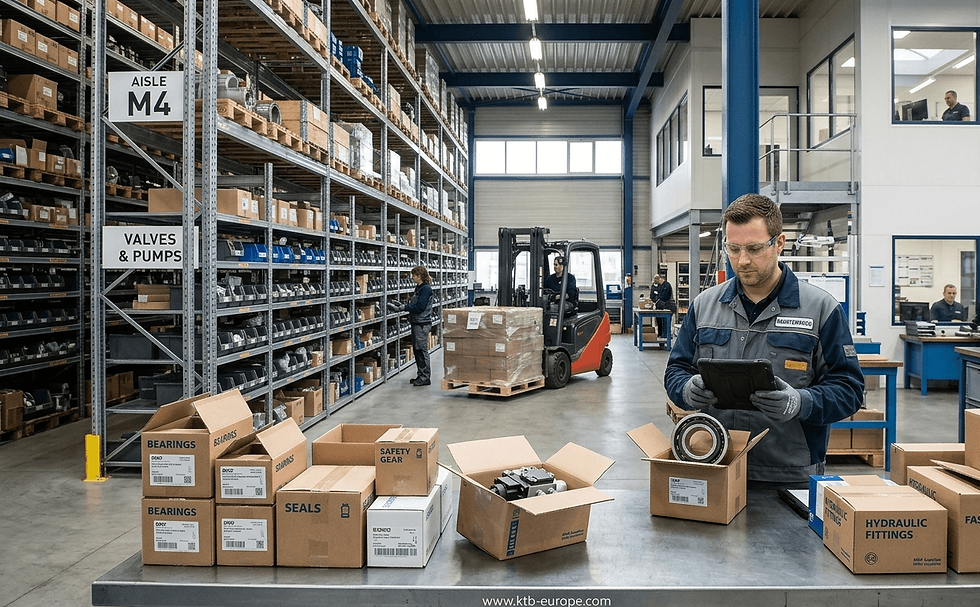
Repair components: bearings, seals, belts, valves, and replacement assemblies.
Automation parts: sensors, PLC modules, servo drives, relays, and communication components.
Electrical and mechanical parts: switches, connectors, motors, fittings, and industrial hardware.
Safety and facility supplies: approved protective equipment and materials needed to maintain safe working conditions.
The exact categories depend on the facility, its equipment, and the organization's purchasing policies.
MRO procurement may involve routine replenishment, planned maintenance purchases, urgent breakdown requirements, and sourcing for equipment approaching the end of its supported lifecycle. Each category has different requirements for availability, approval, inventory, and supplier verification.
The goal is not simply to buy supplies at the lowest quoted price. It is to obtain the correct materials, in the required condition, when they are needed, under commercially and technically acceptable terms.
Why MRO Procurement Matters in Manufacturing
MRO purchasing can influence equipment availability, maintenance costs, inventory levels, and the amount of time teams spend responding to supply problems.
Reducing avoidable downtime
When a critical component fails, procurement delays can extend the time required to restore equipment. A part that is unavailable through the usual channel may require additional supplier research, technical checks, and shipping coordination.
Procurement teams can reduce avoidable delays by identifying critical spare parts in advance, maintaining accurate specifications, and establishing alternative sourcing routes where appropriate. Emergency purchases will still occur, but they do not need to be the only response to predictable supply risks.
Controlling maintenance-related spending
MRO expenditure can be spread across many departments, suppliers, product categories, and purchasing systems. Without consistent purchasing practices, organizations may pay different prices for similar items, place duplicate orders, or incur avoidable expedited shipping charges.
Consolidating purchasing information and comparing equivalent quotations can improve cost visibility. However, consolidation should not eliminate a technically necessary alternative supplier or create a new dependency for critical components.
Improving inventory decisions
Holding every possible spare part is expensive, while carrying too little inventory can increase downtime exposure. Effective MRO purchasing works with maintenance, engineering, and inventory teams to distinguish critical components from routine consumables.
The right inventory policy depends on factors such as failure consequences, consumption patterns, replenishment lead time, storage conditions, and the availability of qualified substitutes.
Supporting maintenance planning
Planned maintenance provides an opportunity to purchase components before they become urgent. When maintenance schedules and procurement lead times are connected, teams can coordinate orders, verify specifications, and arrange deliveries ahead of shutdowns or scheduled repairs.
This reduces dependence on last-minute purchasing and gives the organization more time to compare supply options.
How to Build an Effective MRO Procurement Process
A reliable MRO procurement process gives maintenance, engineering, and purchasing teams a consistent way to move from a requirement to an approved purchase.
1. Standardize item and equipment information
Begin with an accurate item master or spare-parts catalog. Record manufacturer names, complete part numbers, descriptions, equipment references, units of measure, and approved alternatives where applicable.
Incomplete descriptions can lead to duplicate records, incorrect orders, and time-consuming clarification. For automation components, capture revision details and other technical identifiers whenever they affect compatibility.
2. Classify items by criticality
Not every MRO item needs the same purchasing controls. A standard cleaning consumable and a discontinued controller module have very different consequences if they are unavailable.
Classify items using factors such as equipment criticality, failure impact, usage frequency, replacement lead time, and availability of alternatives. This helps determine which items need formal supplier qualification, safety stock, or advance purchasing.
3. Establish clear purchasing workflows
Define how maintenance requests are submitted, who validates technical requirements, which approval levels apply, and when purchase orders can be issued. Standard processes help reduce duplicate orders and prevent purchases from being made outside agreed supplier or budget controls.
Urgent breakdowns may need an accelerated approval route. That route should still capture the part requirement, authorization, supplier details, and reason for the emergency purchase.
4. Evaluate suppliers consistently
Compare potential suppliers on more than unit price. Consider product availability, technical capability, documentation, delivery performance, responsiveness, commercial terms, and their ability to resolve discrepancies.
For critical parts, ask whether quoted stock is physically available or merely expected from an upstream source. Clarify the product's condition and request evidence appropriate to the component and its intended use.
5. Review performance and improve the process
Track purchasing results to identify recurring problems. Useful measures include order lead time, on-time delivery, stockout frequency, emergency-order percentage, purchase-price variance, and supplier-related quality issues.
Review these measures with maintenance and inventory teams. If the same component repeatedly causes urgent orders, investigate whether the cause is an incorrect reorder point, poor demand visibility, an unreliable supplier, or an unexpected equipment issue.
Supplier Selection, Inventory, and Cost Control
MRO procurement decisions often involve trade-offs between availability, inventory investment, and supply risk. A process that optimizes one factor without considering the others can create new operational problems.
Balance stock availability with inventory cost
Holding stock ties up working capital and creates storage, handling, and obsolescence costs. Holding too little can leave maintenance teams waiting for components when equipment needs repair.
For frequently used, predictable items, reorder points and minimum-maximum stock levels may be appropriate. Critical spares with long replenishment times may need separate policies based on the consequences of a stockout rather than historical consumption alone.
Inventory rules should be reviewed when equipment, supplier lead times, production schedules, or maintenance strategies change.
Compare total cost instead of unit price
A low purchase price does not necessarily mean a low overall cost. Procurement teams should consider freight, handling, inspection, inventory carrying costs, expedited shipping, and the potential consequences of receiving an unsuitable part.
When purchases cross borders, buyers should also establish the applicable import charges, documentation requirements, delivery terms, and responsibility for customs formalities. For US-bound shipments, duties and other fees can depend on the goods and entry arrangements, so the applicable requirements should be verified for the specific transaction.
CBP Help
Use comparable assumptions when reviewing quotations: the same part specification, product condition, quantity, delivery destination, and required delivery date. This makes it easier to identify whether a price difference represents a genuine saving or a difference in the scope of supply.
Reduce unnecessary supplier complexity
A large supplier base can create administrative work, inconsistent pricing, fragmented records, and uneven purchasing controls. Reviewing spend by category and identifying overlapping suppliers can reveal opportunities to simplify the process.
However, supplier consolidation should be selective. Critical components may need qualified backup sources, and a secondary supplier only reduces risk if it can provide a suitable product through a sufficiently independent supply route.
The objective is a manageable supplier network that supports competitive purchasing while preserving the flexibility required for important or difficult-to-source items.
When to Use Specialist MRO Sourcing Support
Standard purchasing channels are often suitable for routine consumables and commonly stocked supplies. More complex requirements may need additional sourcing effort, particularly when the component is obsolete, has a long lead time, or is available only through a limited number of suppliers.
Specialist support may help when:
A critical industrial component is unavailable through the usual supplier.
The original manufacturer has discontinued a part or cannot meet the required delivery date.
A purchase requires coordination across multiple suppliers or countries.
Technical details must be checked before a replacement can be approved.
Procurement teams need help comparing supply options and coordinating delivery.
A structured industrial spare parts sourcing approach can expand the options available to maintenance and procurement teams while keeping product requirements, supplier checks, and delivery expectations clear.
The buyer should still define responsibilities before placing an order. Confirm who verifies the product, who arranges transportation, which documents will be provided, and how discrepancies or delays will be handled. Specialist support is most useful when it addresses a specific sourcing challenge rather than adding another unnecessary step to routine purchasing.
Conclusion: Make MRO Procurement More Reliable
Effective MRO procurement connects maintenance requirements with accurate product information, qualified suppliers, sensible inventory policies, and realistic delivery plans. Its success depends on balancing the purchase price against availability, technical suitability, inventory costs, and the operational consequences of delays.
Manufacturers can strengthen the process by standardizing spare-parts data, classifying items by criticality, establishing clear approval workflows, and monitoring supplier performance. For difficult-to-source components, a broader supplier search can provide additional options, provided that product identity and condition are verified before purchase.
The objective is straightforward: obtain the right maintenance materials at the right time, under acceptable commercial and technical conditions, while reducing avoidable purchasing delays and supply risks.
FAQ
1. What is MRO procurement?
MRO procurement is the process of purchasing the materials, spare parts, tools, and supplies required for maintenance, repair, and operations. It supports equipment reliability and facility operations through supplier selection, purchasing, inventory coordination, and delivery planning.
2. Why is MRO procurement important for manufacturers?
MRO procurement helps manufacturers maintain access to the parts and supplies needed to keep equipment operating. Effective purchasing can reduce avoidable supply delays, improve inventory control, support maintenance schedules, and provide better visibility into spending.
3. How can companies reduce MRO procurement costs?
Companies can improve cost control by standardizing item data, comparing equivalent supplier quotations, reviewing duplicate purchases, managing inventory according to criticality, and monitoring emergency orders. Total cost should include delivery, inspection, storage, and potential downtime—not just the quoted unit price.
4. How do procurement teams source hard-to-find industrial spare parts?
Teams should begin with the complete manufacturer part number, revision details, equipment references, and required product condition. They can then investigate alternative suppliers, verify availability and documentation, compare delivered costs, and obtain engineering approval for any proposed substitute.
5. What should businesses consider when choosing an MRO procurement supplier?
Businesses should assess product availability, technical knowledge, supplier credibility, documentation, delivery reliability, communication, and commercial transparency. For critical components, buyers should also verify product identity and condition and establish clear responsibilities for inspection, shipping, and resolving discrepancies.




Comments